


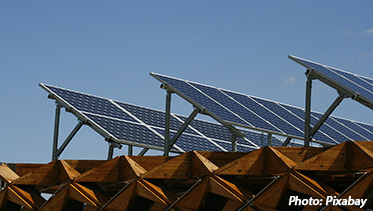
Over 150 days of sunshine per year is an asset for solar power plants in the region of Herzegovina. Five have been launched in the last year and there are four more applications on the desk of the regulating body, ATV’s portal reported. Nebojša Šušić, who is responsible for permits and technical operations in the Regulatory Commission for Energy of the Republic of Srpska, attributed the interest to stimulation awarded to investors.
The entity’s biggest photovoltaic facility is Solar 1, owned by Trifko Nosović from Bileća, in the country’s south. The power plant has the surface of ten thousand square metres. The investment was worth BAM 700,000 (EUR 360,000). The owner says production is significant and that the business is profitable. The 340 MWh generated per year is equivalent to the consumption of 70 households, he said and added the power is sold to the national utility and that earnings per year are EUR 61,000. The commission said in late February it received the application for the initial status of eligibility for subsidies for roof facilities Solar 2 and Solar 3, both with the capacity of 46.8 kW and planned yearly output of 72.5 MWh.
Up to EUR 10 can be saved in a household every month with solar panels, Miloš Lero told Atvbl.com. He also installed a small power generating system, called Bileća, and he says it brings an equivalent of one salary. The report said the pensioners’ centre in nearby Trebinje also taps solar power and that Srpska’s Regulatory Commission for Energy constructed a mini power plant on top of its building.
The law obligates producers to sell power to the state-controlled utility for 15 years before entering the free market. Bosnia and Herzegovina consists of two political entities: Srpska and the Federation of BiH. The geographical region of Bosnia takes up just over three quarters of the country, while Herzegovina is the southern part.