






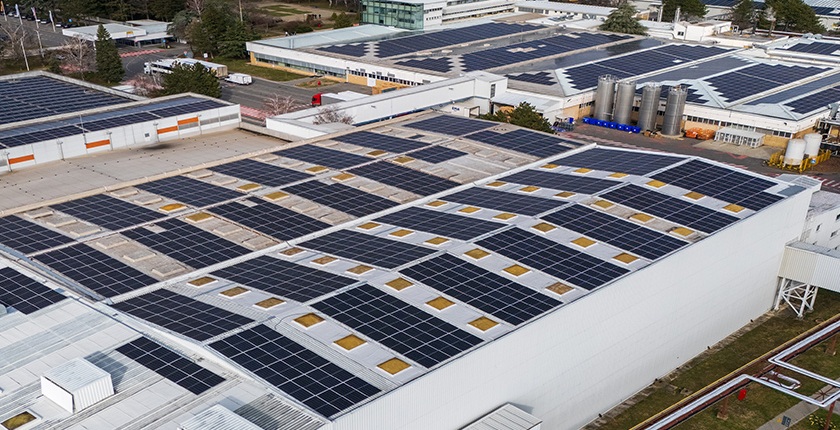
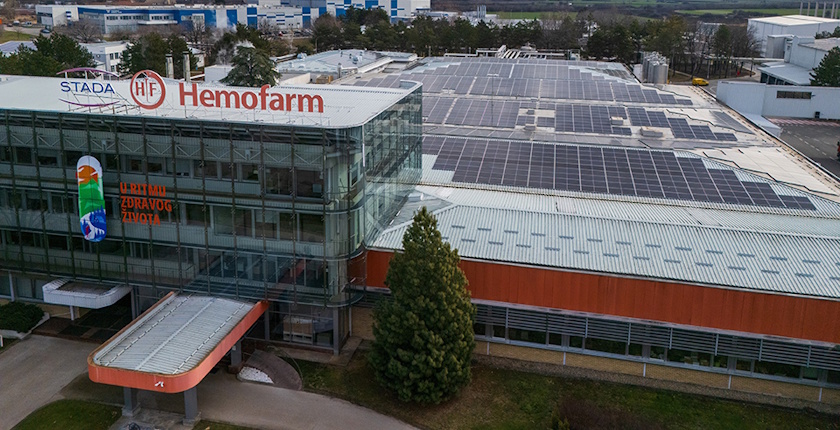
Photo: Hemofarm


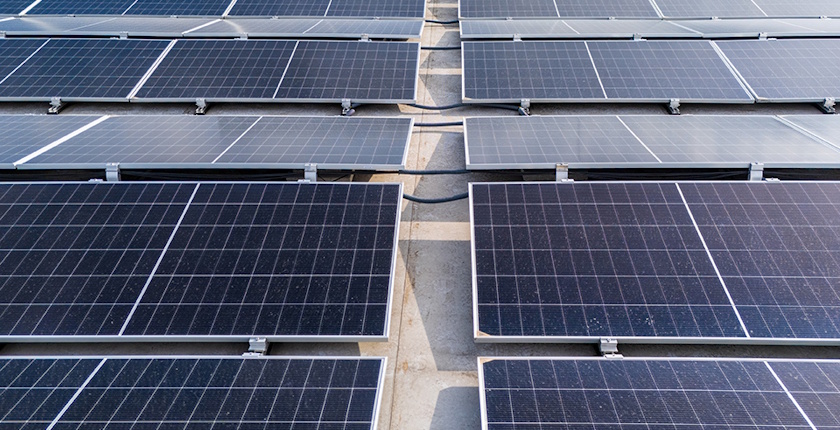
Pharmaceutical company Hemofarm has commissioned a 4 MW rooftop solar power plant, one of the largest in Serbia.
The largest rooftop photovoltaic system, 9 MW, is on the buildings of polymer products maker Peštan, while a facility owned by chemicals firm Henkel has a capacity of 6 MW.
Hemofarm announced that it has commissioned the 4 MW solar power plant on its production complex in Vršac as a significant milestone in its decarbonization strategy and long-term transition toward low-carbon operations-
The EUR 3 million investment in one of the largest industrial rooftop solar facilities in Serbia further confirms Hemofarm’s commitment to integrating sustainability into its fundamental business strategy, the update adds.
The power plant will cover about 12% of average electricity consumption
The plant, spanning 21,000 square meters across 15 buildings, consists of approximately 8,000 solar panels. In 2024, the factory in Vršac consumed 40.1 million kWh, and the plant is expected to produce about 5 million kWh annually.
Hemofarm calculated that its new solar power plant would lower the manufacturing facility’s electricity consumption from the distribution grid by about 12%.
The power plant is expected to provide 50% of the required electricity in summer months
In summer months, when consumption is the highest, the company expects the plant to provide up to 50% of the electricity needs, thereby helping to stabilize energy costs and reduce exposure to market volatility.
In July and August, the heat and the need for cooling are the highest, so Hemofarm counts on a significant reduction in the peak, currently at 8 MW to 9 MW.
Electricity consumption in the summer is much higher than in the winter as the cooling system runs on electricity, while natural gas is used for heating.
Seeliger: The investment represents our strategic focus on building a resilient business
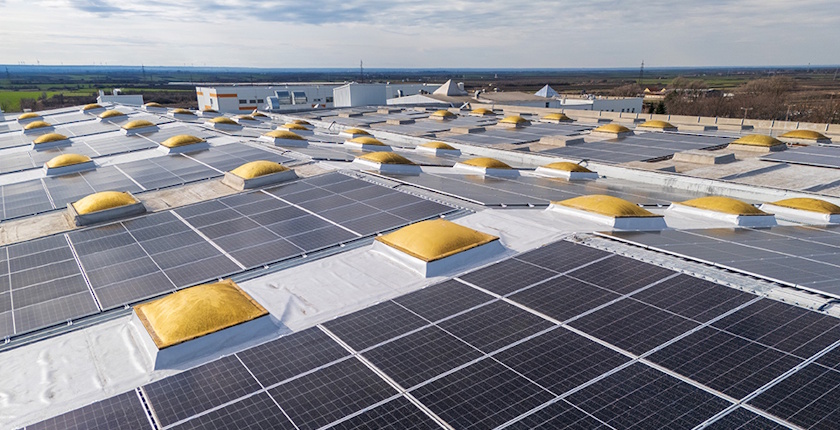
Asked how the power plant operates and whether the company has a prosumer status, the company replied it doesn’t “because the entire quantity of generated energy can be used at any moment.”
“This investment represents our strategic focus on building a resilient, future-ready business. By expanding the use of renewable energy, we are reducing our carbon footprint, strengthening energy security, and creating a more sustainable foundation for long-term growth,” Hemofarm CEO Ronald Seeliger said.
Stanojević: The solar power plant is primarily intended for self-consumption
The project included structural reinforcement of the roof and the implementation of an advanced monitoring system that optimizes performance and ensures operational reliability.
“The solar power plant is primarily intended for self-consumption, allowing for greater predictability and cost stability in the energy supply for the Vršac site, which is one of the key production centers within the STADA Group,” according to Vladan Stanojević, the Vršac site manager.
Hemofarm expects the project to reduce annual CO2 emissions by 3,000–3,500 tons, equivalent to removing nearly 2,000 cars from roads.
Be the first one to comment on this article.