


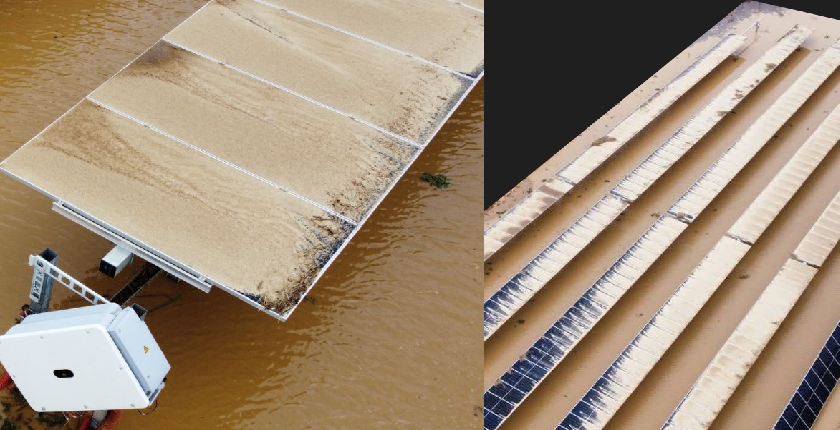
Many photovoltaic plants in the region of Thessaly in Greece have been severely affected by last week’s extreme floods, as water levels exceeded 1.6 meters.
Greek photovoltaic producers have taken a big hit as a result of the rain and flooding that hit the country during the previous week. The worst floods were in Thessaly in Central Greece, home to many commercial photovoltaic plants and ones built by farmers.
The region comprises four districts: Larissa, Trikala, Karditsa and Magnesia. They were all hit by torrential rains, the worst ever recorded in the country.
According to the Panhellenic Agricultural Photovoltaics Association (AFO), which gathers farmers, 80 of its members reported damages to their ground installations. Their extent in other solar power projects remains unknown. There are more than 2,500 units in the region, with about 1,000 MW in total capacity.
AFO added that the flood mostly damaged fences around the plants, power inverters and substations. There were also cases where the panels themselves were affected, though they are usually higher off the ground.
Producers turn to insurance
Insurance is expected to cover a part of the damages, although it depends on the terms of individual contracts. Usually they cover about 10% of damages and the production lost for a few weeks or months. Therefore, it is possible that producers will suffer losses despite insurance claims.
As a first step, they will have to properly identify and present the damage. According to AFO, out of the 80 affected members, only two had not insured their investments.
Spanoulis: Billions in damages for the region
The association’s chairman Kostas Spanoulis told Sky News it was a unique weather phenomenon and that total damages for the local economy are calculated in billions of euros.
Since a large part of Greece’s agricultural production is in Thessaly, early estimates are that 20% to 22% of the country’s crops would be lost and take years to recover as a result of ground degradation. The government has already called the European Union for emergency assistance ahead of the upcoming winter.
Comments (1)
Kenis
I will like to buy all the flooded solar panels,