


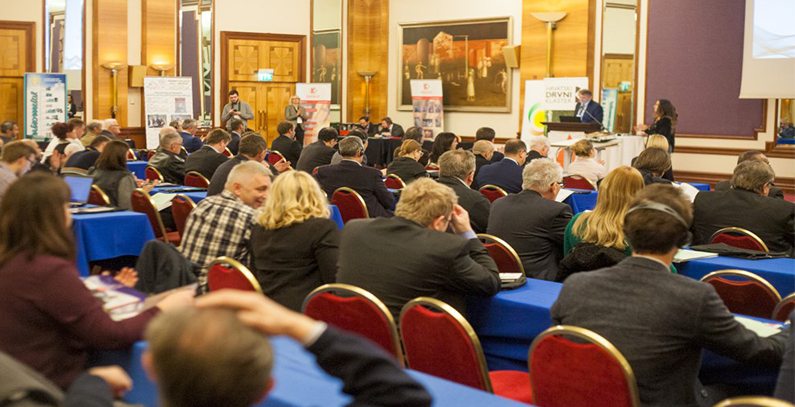
The introduction of excise duties on biomass and other renewables in Croatia was the main topic during the International Conference on Biomass and Renewable Energy Sources held in Zagreb.
The representatives of the Croatian Wood Cluster, which has been the conference organizer for seven years in a row, have warned that the introduction of the excise duties on renewables, including biomass, would completely destroy biomass cogeneration and pellet production in that country. According to announcements, the excise duties on products derived from renewables will be 15%.
The CROBIOM association which brings together pellet and biomass producers, as well as associated technologies, says that the introduction of such charges would be “a dangerous precedent”.
“Moreover, the retrograde changes to the conditions for investment will be a blow to all those investors who have already invested hundreds of millions of euros in energy production from wooden biomass, which have perceived Croatia as a stable region for investment, as well as to dozens of local and foreign business entities, which are in various stages of preparation and implementation of biomass cogeneration projects,” reads the press release published by CROBIOM.
Investments worth EUR 640 million threatened
According to the representatives of the industry, the consequences of the announced proposal on the introduction of the excise duties could be immeasurable and far-reaching for an array of industrial sectors. First of all, the future of rural areas could be affected, where these measures would have an adverse impact on employment.
The wood industry in Croatia makes up 10% of the country’s export and accounts for 3.6% of the GDP. The introduction of excise duties would threaten investments worth more than EUR 190 million, as well as projects in progress worth more than EUR 450 million.
More than 250 participants from SEE, France, Austria, Germany & Belgium gathered in Zagreb for the 7th International #WoodEnergyConference ! pic.twitter.com/ENaiTylbQh
— CROBIOM (@crobiom) February 24, 2017
Viktor Radić, the regional manager for the South-Eastern Europe (SEE) of the Austrian company Polytechnik, who attended the conference in Zagreb also believes that such measures are a blow to investors.
“Such a model does not exist anywhere in Europe, that you on one side support electricity producers with feed-in tariff and on the other side you take a share from their profits through excise duties,” says Radić for the portal Balkan Green Energy News.
The representatives of the European Biomass Association (AEBIOM) have also attended the conference. They are working on a response to the proposed measures. If the Government decided to apply them, the Association will react, according to the information from the conference.
The conference has brought together more than 250 participants from SEE, France, Belgium, Germany and Austria. However, none of the decision makers in Croatia has participated in it.