





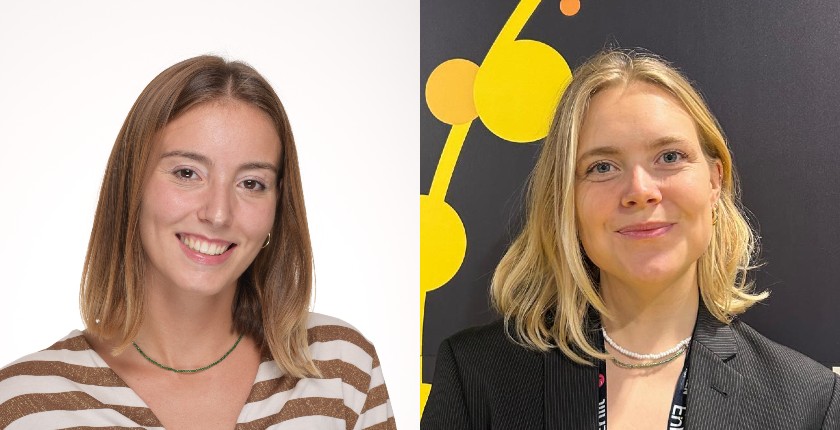
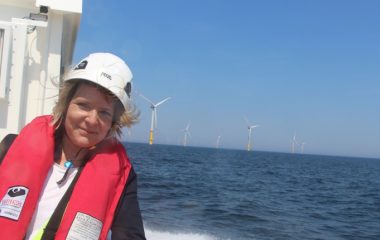
Photo: EUSEW


Author: Anna Cocchi, Project Officer, ‘Fast & FairRenewables’ (FFRes) and Meie Kleijburg, Stakeholder Officer for Youth-lead Organisations ‘Fast & FairRenewables’ (FFRes) at the European Youth Energy Network (EYEN), a partner organisation of EUSEW
The 2050 net zero target is often talked about as a distant milestone on a map, but for us as young people, 2050 isn’t just a target; it’s our future. If we really want to achieve net zero, it is essential to recognize young people as essential, local partners today. Including youth as professional actors of the energy transition goes hand in hand with the “Local Projects – Local Influence” principle, showing that early and meaningful engagement of local groups is key to accelerating renewable deployment. From our experience as a European youth network, it is clear that youth must be involved from the start.
Positioning youth at the heart of the clean energy transition: a youth-led perspective
The mission of the European Youth Energy Network (EYEN) is to place young people at the heart of the clean energy transition: we believe in a future where European youth is instrumental in shaping a just and sustainable transition. As a volunteer-based think tank, EYEN works to build intergenerational collaboration and trust, equip young people with the necessary knowledge and skills, and create concrete spaces for them to act.
EYEN addresses a knowledge gap among decision-makers on how to meaningfully involve youth and respond to the needs and challenges of future generations. While the EU’s decarbonisation framework sets ambitious 2050 targets, implementation at the local level often lacks the structured engagement needed to ensure youth participation. Young people are ready to contribute but frequently face closed decision-making processes due to limited resources or unclear entry points. Beyond inclusion, youth represent an untapped energetic force in the energy transition: the more young people are involved, the faster policies and projects translate into real-world impact. When young people are meaningfully involved in decision-making, momentum increases, innovation flourishes, and implementation capacity is strengthened. Young people bring long-term vision and strong local networks, making them essential partners in the transition happening today.
At EYEN, our stance is clear: young people are not merely the “owners of the future,” but essential, professional partners whose participation must be embedded beyond tokenism into the core of energy policy, infrastructure planning, and grid development.
Local projects, local influence: delivering fast & fair renewables
A strong belief in action at the local level is a central pillar of EYEN’s work. In 2024, EYEN collaborated with ICLEI, a global network of more than 2,500 local and regional governments, to develop European baseline principles for the so-called Fast & Fair Renewables project. These principles emphasise that early and meaningful engagement of local interest groups is a prerequisite for successful renewable deployment, not an optional extra. Partnerships between municipalities, networks like ICLEI, and youth organisations demonstrate how youth engagement can be scaled beyond isolated initiatives.
It is within this gap that EYEN seeks to intervene, identifying effective ways to connect municipalities with youth organisations: this requires transparent communication, adequate resources, and feedback mechanisms to build trust. When meaningfully involved, young people act as catalysts at the local level, amplifying awareness of renewable projects and translating policy objectives into community-wide action.
Energy communities as intergenerational infrastructure
The transition to a decarbonised Europe is a shared journey. Empowering young people to influence energy infrastructure in their own local contexts through energy communities is, therefore, a crucial policy topic. In this context, the Fast & Fair Renewables project is closely connected to the Renewable Energy Directive (RED III), which provides the legal framework for Renewable Energy Communities (RECs). RECs enable citizens to take direct ownership of energy production and governance. By aligning youth engagement with RED III, municipalities can transform energy projects from top-down impositions into community-led initiatives, building more resilient, transparent, and equitable energy systems.
From the perspective of youth organisations across Europe, a joint and collaborative public engagement strategy is needed, built on early youth involvement, dedicated resources, transparent communication, and dialogue formats tailored to younger audiences. Equipping youth with knowledge builds trust; professionalising this dialogue ensures that young people’s input is traceable and reflected in final decisions. In this way, youth-led organisations become credible partners for municipalities, ensuring that climate objectives are not only ambitious on paper but achievable in practice.
This opinion editorial is produced in co-operation with the European Sustainable Energy Week (EUSEW) – the biggest annual event dedicated to renewables and efficient energy use in Europe. #EUSEW2026 marks the 20th edition and will once again bring together the community of people who care about building a secure and clean energy future for the next generations. Check the currently open calls to join.
Disclaimer: This article is a contribution from a partner. All rights reserved. Neither the European Commission nor any person acting on behalf of the Commission is responsible for the use that might be made of the information in the article. The opinions expressed are those of the author(s) only and should not be considered as representative of the European Commission’s official position.


Be the first one to comment on this article.