







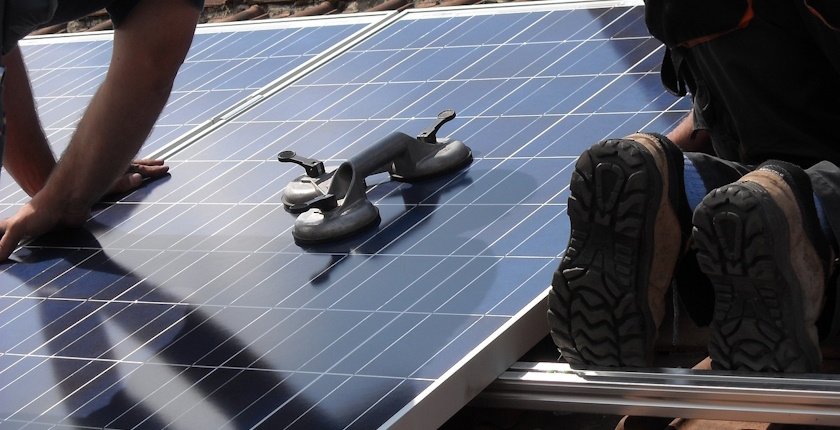
Photo: Maria Godfrida from Pixabay


Share


The new Law on Electricity in the Federation of Bosnia and Herzegovina introduced several improvements in the energy sector for companies, investors and citizens. The legislation particularly streamlined the procedure for the construction of small renewable electricity plants, which is supposed to increase the number of consumers producing electricity for self-consumption.
The Federal Ministry of Energy, Mining and Industry said the recently adopted Law on Electricity cuts red tape in the entity and simplifies licensing for setting up production facilities. It will save time and money for investors in energy infrastructure, it stressed.
Bosnia and Herzegovina consists of two entities: the Federation of BiH and the Republic of Srpska.
Energy and operational permits for units with an installed capacity lower than 1 MW have been abolished.
The procedure for power plants of up to 23 kW was simplified
The procedure was also simplified for connecting self-consumption renewable electricity plants of up to 23 kW to the grid.
Investors no longer need approval that project documentation is aligned, as the obligation was deemed unnecessary and time-consuming, the ministry said.
The law introduced a certification system for installers of solar and wind power plants
The legislation stipulates the rollout of a certification system for installers of solar and wind power units of up to 23 kW.
It means investors will have a single contact point: an authorized person to entirely manage installation and commissioning without the need to involve a large number of competent authorities in the procedure, the ministry said.
The solution created the necessary conditions to change the regulations in the construction sector. It will allow small solar and wind power facilities to be treated as equipment and exempt them from the obligation to obtain planning, construction and operational permits, the ministry explained.
The goal is to stimulate the development of small power plants that are usually installed by citizens
The ministry said its goal was to stimulate renewable energy generation units. It is especially important for power plants with a lower capacity – mostly installed by citizens (prosumers), the Federal Ministry of Energy, Mining and Industry pointed out.
The law was drafted in cooperation with domestic and international institutions and experts, with technical support from the United States Agency for International Development (USAID).

Be the first one to comment on this article.