

News

Works underway to install 3,200 solar panels

Published

November 15, 2015

Comments

comments icon

0

Share

Published:

November 15, 2015

Comments:

comments icon

0

Share

The government’s provisional directive on renewables led to increased interest in this segment recently, and a few years ago entrepreneur Azem Bujak and his Bahen gradnja d. o. o. from Sarajevo built the first solar power facility in eastern Bosnia near Goražde, Al Jazeera reports. The investment of BAM 500,000 (EUR 255,650) was implemented in his home village of Bujaci, where the generated electricity supplies up to 80 households since May of 2013.

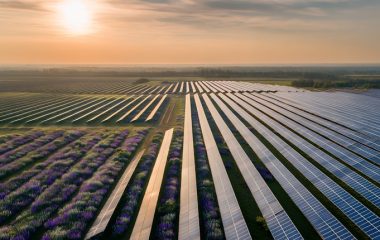
Bujak bought land at a selected position in the nearby village of Rešetnica and started an even larger project on 11,500 square metres. The power plant worth EUR 1.53 million will have the capacity of 1 GWh a year in its 3,200 panels, he said and added the investment could pay out within eight years.

Prime minister of Bosna-Podrinje Canton Goražde Emir Oković and the region’s minister of economy Esed Radeljaš visited the site in early November.
Related Articles

nova bess romania battery

Romania’s biggest battery system put into operation

13 December 2025 - Nova Power & Gas has commissioned a battery energy storage system with an operating power of 200 MW and a capacity of 400 MWh

corbii mari nofar solar romania

Nofar Energy launches work on Romania’s largest solar park

13 December 2025 - Israel's Nofar Energy has begun construction of the 282 MW Corbii Mari solar park in Romania, with plans to connect it to the grid in 2026

north macedonia power line dalekovod kodar elnos mepso croatia serbia bih

Firms from Croatia, BiH, Serbia to build power line in North Macedonia

12 December 2025 - The contracted works include the construction of a 400 kV power line from the 400/110 kV Bitola 2 substation to the border with Albania 

slovenia climate vulnerability risks energy assessment

Slovenia draws up first climate vulnerability, risks assessment for energy sector

12 December 2025 - The assessment was prepared by the Ministry of the Environment, Climate and Energy, in cooperation with the Jožef Stefan Institute