







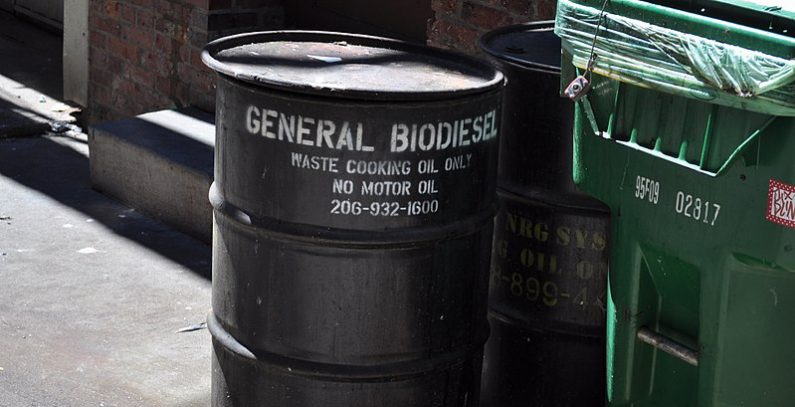
Photo: Joe Mabel/Wikimedia Commons


Oil and gas company INA has collected more than 3 tonnes of waste cooking oil from buyers and other individuals at its filling stations in Croatia in the first year since launching the new “green” service. Under the project, the collected waste cooking oil is recycled rather than poured down the drains and into the environment, the company said in a press release.
The largest quantities of waste cooking oil were handed over to INA by residents of Zagreb’s Trešnjevka quarter, over 340 kg, followed by Varaždin, 330 kg, and Čakovec and Zagreb’s area of Maksimir, with 290 kg each.
High levels of environmental awareness were also demonstrated by residents of Kutina, Koprivnica, and Zagreb areas of Vrapče and Dugave, with over 200 kg of waste cooking oil handed over for recycling each at INA’s filling stations.
“We thank our loyal buyers and other citizens for recognizing this new service offered by INA. Waste cooking oil is a raw material that does not belong in drains. The company is currently reviewing options to offer this service in other parts of Croatia as well and has proposed the project for funding under the EU’s LIFE program for environmental protection projects,” said Vesna Kučan Polak, the manager of the pilot project.
Unlike restaurants, households in Croatia are not required under the law to collect waste cooking oil, but can help improve environmental protection by recycling it. Waste cooking oil is a raw material in the production of biofuel. If dumped, even though biodegradable, it can temporarily pollute land and water and jeopardize wildlife, the press release notes.
In order to help raise awareness among children and their parents, INA, in cooperation with Agroproteinka, which started collecting waste cooking oil in 2008, has organized a series of lectures at elementary schools and kindergartens over the past period.
Croatia generates an estimated 9 million liters of waste cooking oil annually, or more than 2 liters per capita. Compared to developed EU nations, Croatia lags behind on waste cooking oil collection. In Belgium and Austria, for example, households recycle over 50% of used cooking oil.


Be the first one to comment on this article.