





Photo: BGEN


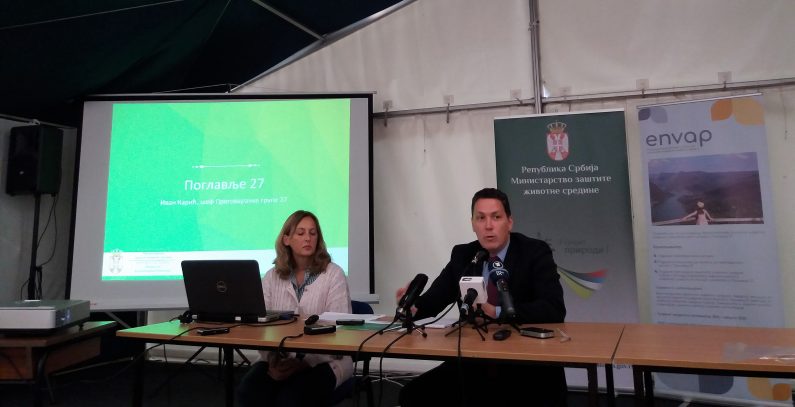
Serbia currently estimates the cost of implementing chapter 27 of EU accession talks, which deals with the environment, at EUR 11.5 billion, over EUR 8 billion of which needs to be invested in the waste and water sectors alone, State Secretary at the Ministry of Environmental Protection Ivan Karić told a media conference at the Jevremovac Botanical Garden in Belgrade today.
The green economy and environmental protection can provide a major economic boost to Serbia, including in terms of job creation, as well as cut state spending on health care, said Karić, who is head of Serbia’s negotiating team for chapter 27.
“The current estimate is that over EUR 8 billion in investment will be needed for the waste and water sectors alone, and most of the requirements will have to be met prior to accession, which will call for significant financial and human resources. Work on improvements has begun, but needs to be accelerated,” said Karić, noting that the ministry has created administrative frameworks for environmental protection, but that protection needs to be based on a socially accepted system of values and will not be possible without raising the level of environmental awareness.
Karić noted that Serbia expects 50% of the investment needs to come from EU funds, but first needs to demonstrate it can secure 30% from own sources. The remaining 20% would come through various credit and public-private partnership (PPP) arrangements, he said.
Serbia focused on obtaining good transitional periods
It is estimated Serbia can be prepared to open chapter 27 by the end of 2019, but the authorities are ready to work on the negotiating position even longer to ensure requirements the country and its companies will have to meet are well negotiated, according to Karić, who noted that Directive Specific Implementation Plans (DSIPs) are being developed for the most expensive and demanding issues, for which Serbia seeks to obtain appropriate transitional periods.
As part of the EU accession process, Serbia needs to transpose 200 regulations concerning environmental protection, including those referring to air and water quality, the protection of nature, industrial pollution and risk management, chemicals management, and the fight against climate change, according to the ministry’s presentation at the media conference.
The task at hand includes building 359 wastewater treatment plants and 10,400 km of sewerage networks given that about 55% of the population is covered by the wastewater collection system, with only 7.3% of the collected wastewater being biologically treated, while the percentage chemically treated is even lower.
In Serbia, around 30% of generated solid municipal waste is deposited at a total of 10 sanitary landfills, including 8 regional and 2 municipal landfills. Only about 3% of municipal waste in Serbia was recycled in 2016, compared to the EU’s requirement of 50% for 2020 and the revised 65% target for 2035.
More than 230 companies in Serbia need to obtain an integrated pollution prevention and control (IPPC) permit and meet requirements under the EU’s Directive on Industrial Emissions.
Regional climate change adaptation initiatives likely to be considered
Over the past 20 years, investments to counter effects of pollution and climate change in Serbia, including those concerning floods, droughts, landslides, and forest fires, have been such that Serbia could have met 80% of chapter 27 requirements had it invested that kind of money in prevention in order to avert pollution and the extreme impact of climate change, Karić said.
Serbia is not the only country affected by climate change and will likely in the future consider regional climate change adaptation initiatives, he said.


Be the first one to comment on this article.