


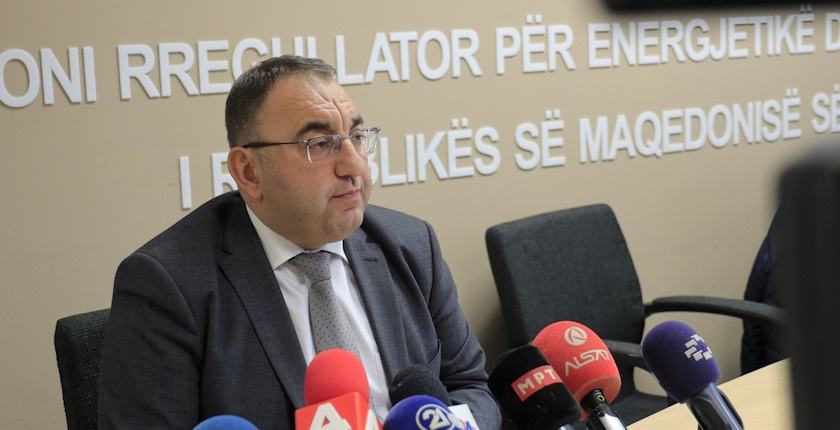
North Macedonia intends to introduce a new electricity supply model for public institutions to lower their costs, according to Marko Bislimoski, president of the Energy and Water Services Regulatory Commission.
Head of the Energy and Water Services Regulatory Commission (RKE) Marko Bislimoski proposed that non-profit institutions established by state and municipal authorities, including schools, kindergartens and hospitals, unite and jointly purchase electricity.
Such a model could reduce electricity bills by pushing supplier margins lower, he said, as quoted by state news agency MIA.
It is possible that state-owned power utility Elektrani na Severna Makedonija (ESM) can provide the entire quantity for the said category of consumers, but maybe other firms would be suppliers as well, in Bislimoski’s opinion.
Margins for the consumers in question are currently 25% to 30%
The institutions in question currently conduct a large number of public procurements and sign supply contracts with margins at 25% to 30%, he underscored. As the liquidity of such consumers is poor, many tenders end up with no bids, according to Bislimoski.
Moreover, they are forced to go to the supplier of last resort if they can’t purchase electricity, which further increases their costs, he explained.
It is possible that ESM can provide all the quantities needed for these institutions
Bislimoski stressed ESM sells power to the universal supplier for EUR 62 per MWh and that it is causing losses.
It is necessary to determine how much electricity it can provide, he pointed out. If ESM cannot cover the said category, a conventional public call should be launched, according to Bislimoski.
He expressed the belief that other power suppliers would have lower margins.
The liberalization of the electricity market has forced consumers such as schools or hospitals to buy electricity on the market. Previously they obtained it from the universal supplier.