


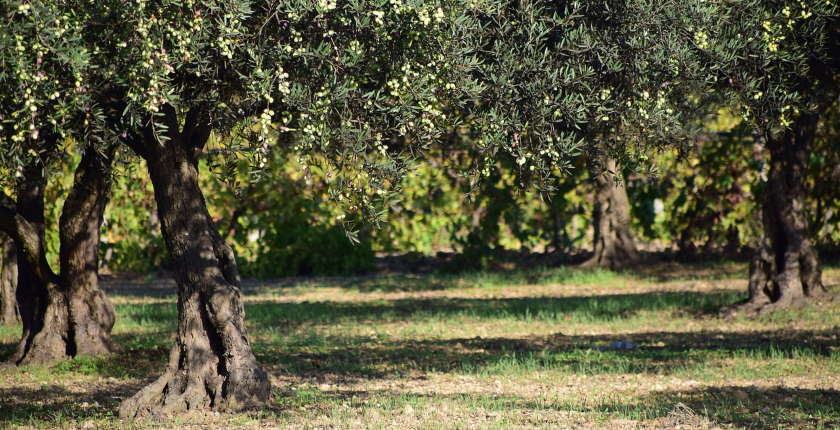
Before the agreement with the Energana Benkovac biomass-fueled plant, agricultural cooperative Maslina i vino had no other solution but to burn much of the waste from its olive trees and vines.
GEEN Holding’s Energana Benkovac will source hundreds of tons of biomass for its combined heat and power (CHP) plant per year from a nearby producer of olive oil and wine. Agricultural cooperative Maslina i vino from Polača in Croatia’s coastal region of Dalmatia agreed to participate in a pilot project for the waste from its 12,000 olive trees and 50,000 vines.
Only the thicker pieces of wood were distributed for heating until the start of the pilot project
Until recently, the cooperative was destroying much of the fuel that is now sent to the biomass facility by burning it in the field as there was no alternative. Its Project Manager and Director Radoslav Bobanović said only the thicker pieces of wood were distributed for heating.
In his words, an olive tree discards between 30 and 40 kilograms of biomass every year compared to 300 to 600 grams per vine. The cooperative said the biomass includes waste from its fig orchards.
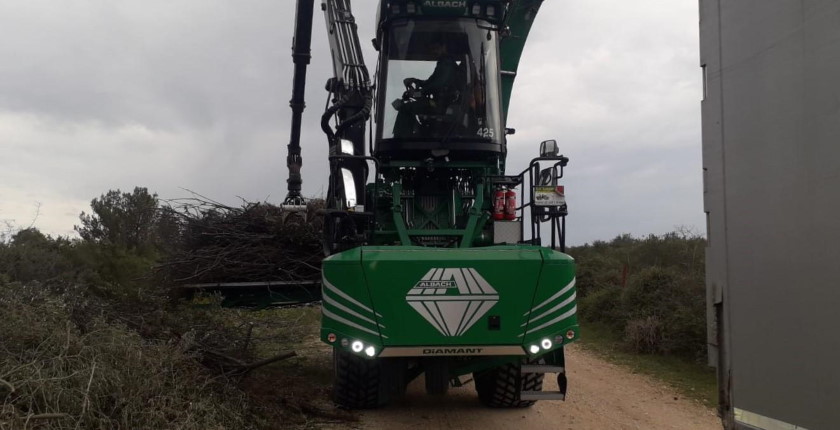
Bobanović told Balkan Green Energy News he is aware of the effect of carbon dioxide emissions on the environment and that Maslina i vino was looking for a solution since 2010. It was examining the possibility to give the fuel to schools and retirement homes for free, but there was no breakthrough as they would have to adapt their heating facilities, he asserted.
The project manager added the local authority and entrepreneurs that can supply biomass need to find a way to deposit and process agricultural waste with the help of the Government of Croatia and that energy producers could participate and cover some of the costs. He said Maslina i vino, or MasVin, uses its olive pomace as a fertilizer now but that it would be more effective to turn it into heating fuel.
Stakeholders need to find a way for depositing agricultural waste
Energana Benkovac, active since October 2018, has an electricity production capacity of almost 5 MW. Czech renewable energy producer GEEN Holding also has an equivalent CHP unit in Županja in Croatia’s northeast. It operates several photovoltaic and hydropower plants in its homeland and in Slovakia and Georgia.