


The draft for the RESTORE public call for support to energy storage facilities in the electricity transmission system was issued for public consultation. Bulgaria earmarked EUR 589 million for the endeavor, funded under the European Union’s Recovery and Resilience Facility.
The Ministry of Energy in Sofia plans to launch a tender on September 2 for standalone energy storage systems. It issued the draft framework for public debate, which lasts one month. The government said it prepared EUR 589 million in subsidies for the construction and commissioning of a national infrastructure for storing electricity from renewable sources.
The goal is to support at least 3 GWh of capacity within the transmission electricity network, run by Electricity System Operator (ESO). The mechanism is funded through the National Recovery and Resilience Plan (NRRP). It is part of the European Union’s Recovery and Resilience Facility.
Developers can count on up to EUR 190,000 per MWh excluding VAT
Total budget for the RESTORE tool amounts to EUR 602 million. The highest allowed grant per applicant and for one project at most is EUR 75.9 million. The program is set to cover up to 50% of costs, but no more than EUR 190,000 per MWh, excluding value-added tax.
The public call would be for individual projects for 10 MW to 300 MW in operating power and storage duration of at least two hours, translating to 20 MWh to 600 MWh in capacity.
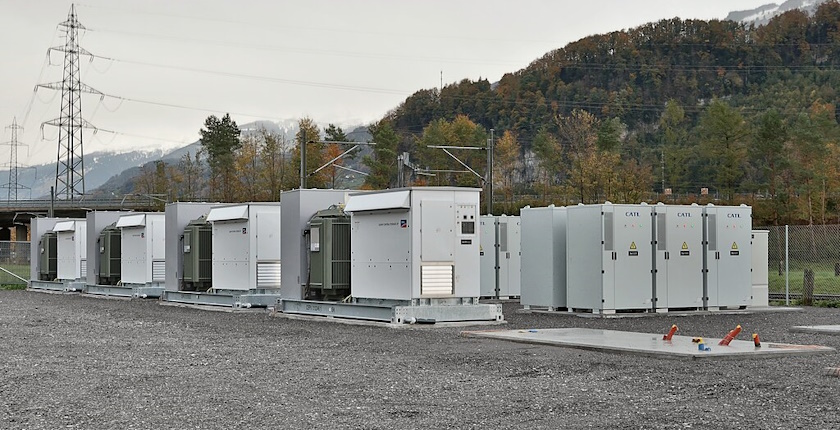
The scheme is aimed at supporting a minimum of 3 GWh in energy storage capacity
Eligible costs are calculated from March 9, 2023 until March 31, 2026 at the latest.
The selected facilities would provide primary frequency regulation and automatic secondary frequency regulation services.
Bulgaria already held the first two tenders for battery energy storage systems (BESS) that would be integrated with renewable electricity plants.
Bulgaria gives special focus to energy storage
Earlier this month, Renalfa IPP has started the commercial operation of its first utility-scale battery energy storage system. The 25 MW – 55 MWh facility in the town of Razlog in southwest Bulgaria is colocated with a 33 MW photovoltaic plant.
It is one of the first BESS units in Eastern and Southeastern Europe and the largest one in Bulgaria.
Batteries and other kinds of storage are necessary to balance the shortfall and surplus in electricity production of wind and solar power plants, as they depend on the weather. For instance, on sunny days, photovoltaics tend to overload the grid around noon.
Storage enables the surplus to be sold and consumed at a time of higher demand or lower production. Otherwise, network operators are forced to cut off some units.
Bulgaria is relying heavily on battery technology and energy storage overall in its energy transition. Belgian company ABEE launched a EUR 1.1 billion project in December for a battery plant, recycling facility and a research and development center.
Solar MD, a battery manufacturer based in South Africa, opened its LiFePO4 Energy Storage facility in Rousse last year. State-owned Bulgarian Energy Holding or BEH has established a subsidiary for green energy and storage projects.
Neighboring Greece completed its second auction for standalone battery projects in February. Serbia is negotiating with Hyundai Engineering and UGT Renewables after selecting them for a strategic partnership for 1 GW of solar power with batteries. Turkey has given priority in 2022 to renewable electricity projects with storage that have matching capacity and operating power, respectively.